
Table of Contents
- Article Overview
- Telehealth Perspective on Automation
- Bridging Technology and Patient Care
- Automation Benefits for Telewellness
- Overcoming Barriers in Telehealth
- Future of AI in Telewellness
- Conclusion
Article Overview
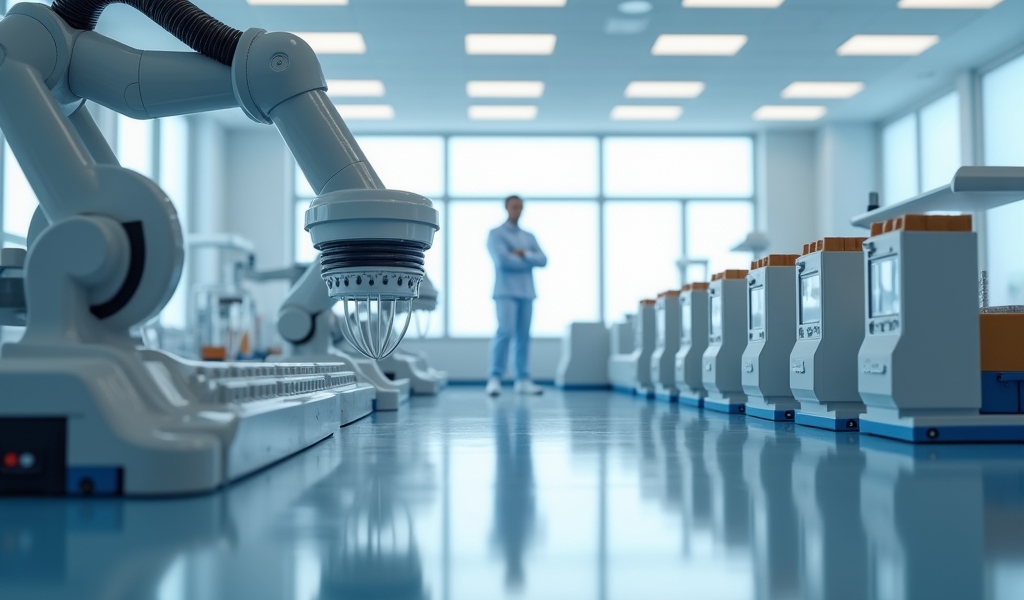
The pharmaceutical industry stands at the threshold of a major transformation in small-molecule drug manufacturing, as highlighted in the recent Pharmaceutical Technology article “Leap Forward in Automation Anticipated for Small-Molecule Drug Product Manufacturing.” This comprehensive piece explores how automation technologies are revolutionizing pharmaceutical manufacturing through improved efficiency, consistency, and quality.
The article details how automation, once underutilized in small-molecule manufacturing, is now gaining momentum due to increased drug complexity, cost pressures, and workforce challenges. It outlines how the combination of advanced hardware and software solutions, including artificial intelligence and machine learning, is creating more responsive manufacturing systems.
Telehealth Perspective on Automation
At Dr Telx, we view the automation trends highlighted in this article as parallel to the evolution occurring in telehealth. Just as pharmaceutical manufacturing benefits from automation to enhance quality and efficiency, telehealth platforms are leveraging similar technologies to transform healthcare delivery.
The drivers mentioned in the article – increased complexity, cost pressures, and workforce challenges – mirror those in modern healthcare. As patient care becomes more complex and healthcare faces staffing shortages, automation and digital tools have become essential for maintaining and improving care standards.
We particularly resonate with John Nadzam’s observation that automation “acts as a force multiplier for efficiency, consistency, and quality.” In telehealth, our digital systems similarly amplify the capabilities of healthcare providers, allowing them to deliver more consistent, high-quality care to a broader patient population.
Bridging Technology and Patient Care
The pharmaceutical industry’s challenge of balancing technological advancement with human expertise reflects our own experience in telewellness. While automation brings tremendous benefits, we firmly believe that technology should enhance, not replace, the human element in healthcare.
The article notes that “human oversight remains essential for automation to be successful” – a principle that guides our approach at Dr Telx. Our platform integrates advanced digital tools while preserving the irreplaceable value of provider-patient relationships and clinical judgment.
We’ve found that patients appreciate technological conveniences but still desire personal connection with healthcare providers. Our telehealth model strikes this balance by using automation for administrative tasks, data analysis, and treatment monitoring while ensuring providers have more time for meaningful patient interactions.
Automation Benefits for Telewellness
The benefits of automation described in the pharmaceutical context translate remarkably well to telewellness. Just as automated manufacturing systems reduce waste and process deviations, our digital healthcare platform minimizes administrative inefficiencies and reduces errors in healthcare delivery.
Real-time monitoring capabilities, highlighted as crucial in pharmaceutical manufacturing, are equally valuable in telehealth. Our systems continuously monitor patient data, enabling early intervention when health metrics indicate concern. This proactive approach improves outcomes and reduces the need for emergency interventions.
The article mentions that automation helps address workforce shortages by “allowing scientists and operators to focus on critical process understanding rather than repetitive tasks.” Similarly, our telehealth automation tools free our providers from routine paperwork and basic triage, allowing them to focus their expertise on complex diagnosis and personalized treatment plans.
Overcoming Barriers in Telehealth
The challenges to automation adoption mentioned in the article – high upfront investment, skills development needs, and data standardization issues – are familiar territory in telehealth implementation. At Dr Telx, we’ve navigated these challenges through strategic planning and gradual, thoughtful implementation.
We’ve found success by following the article’s recommendation to “adopt a holistic approach that blends technology, process design, and cultural readiness.” Our implementation strategy involves cross-functional teams, comprehensive provider training, and continuous feedback loops to ensure technology serves our clinical goals rather than the reverse.
The article’s emphasis on establishing digital roadmaps with short and long-term goals resonates with our approach. We’ve found that incremental automation implementation allows for proper testing, refinement, and cultural adaptation, leading to more successful outcomes than attempting wholesale transformation.
Future of AI in Telewellness
The article’s discussion of AI’s evolving role in pharmaceutical manufacturing reflects our vision for AI in telewellness. The prediction that AI tools will enable “real-time adjustments and predictive maintenance” parallels how we see AI enhancing patient care through predictive analytics and personalized treatment optimization.
At Dr Telx, we’re particularly interested in how AI can support clinical decision-making while maintaining provider autonomy. The article’s vision of “AI-driven decision support” that minimizes human intervention while “maintaining compliance through automated documentation” describes our goal of reducing administrative burden while enhancing clinical effectiveness.
We believe telehealth is moving toward the article’s “ultimate vision” of systems where “real-time data drives dynamic control, lifecycle management, and continuous improvement.” In healthcare terms, this means platforms where patient data seamlessly informs treatment adjustments, care coordination, and ongoing quality improvement.
Conclusion
The pharmaceutical industry’s automation journey offers valuable insights for telehealth providers. At Dr Telx, we see strong parallels between manufacturing automation and healthcare digitization – both aim to enhance quality, consistency, and efficiency while addressing workforce challenges and increasing complexity.
As we continue to develop our telewellness platform, we remain committed to balancing technological advancement with the human connection that remains central to healthcare. By thoughtfully implementing automation and AI solutions, we can deliver more accessible, personalized, and effective care to our patients.
The future of healthcare, like pharmaceutical manufacturing, lies in finding the optimal integration of advanced technology and human expertise. At Dr Telx, we’re dedicated to pioneering this integration in telewellness, creating a model of care that combines the efficiency of automation with the irreplaceable value of personalized clinical judgment.